Welcome to the Mathematical World!
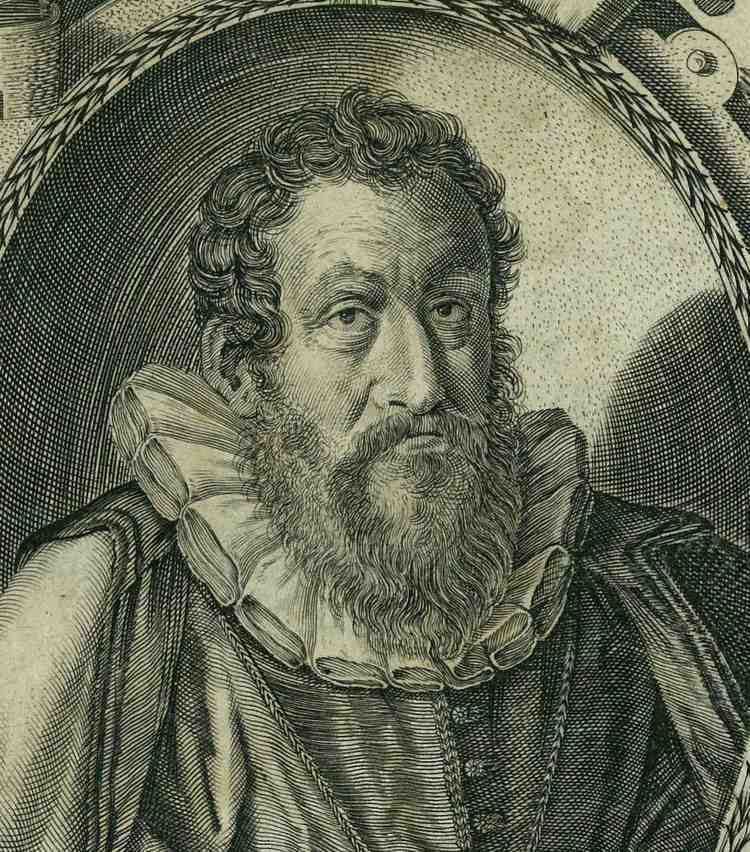
Gerolamo Cardano (1501 – 1576)
Renaissance Polymath and Pioneer of Algebra and Probability
Cardano was a Renaissance polymath who made groundbreaking contributions to algebra, probability, and mechanics. He published solutions to cubic and quartic equations in Ars Magna (1545), expanding the boundaries of algebraic knowledge. For example, a general cubic equation \[ x^3 + px + q = 0 \] could be solved using Cardano’s formula, introducing radicals and what would later become the theory of complex numbers: \[ x = \sqrt{-\frac{q}{2} + \sqrt{\left(\frac{q}{2}\right)^2 + \left(\frac{p}{3}\right)^3}} + \sqrt{-\frac{q}{2} - \sqrt{\left(\frac{q}{2}\right)^2 + \left(\frac{p}{3}\right)^3}}. \]
Cardano also explored probability theory, analyzing games of chance, dice, and betting to understand likelihoods and outcomes—a foundation for modern statistics. Beyond pure mathematics, he applied quantitative reasoning to mechanics, medicine, and engineering, demonstrating the utility of numbers and equations across disciplines.
Known for his boldness and creativity, Cardano embraced the use of negative numbers and complex solutions, challenging conventional thinking and extending the conceptual reach of algebra. His work encouraged the systematic treatment of equations and probabilistic reasoning, influencing later mathematicians such as Euler and Pascal.
Cardano exemplifies the Renaissance ideal: combining curiosity, practical application, and abstract reasoning to extend knowledge and solve problems across multiple domains, leaving a lasting legacy in mathematics and science.
Facts:
- Born in Pavia, Italy.
- Published Ars Magna, presenting solutions to cubic and quartic equations.
- Early work on probability using dice and games of chance.
- Practiced medicine and mechanics alongside mathematics.
- Introduced and worked with negative numbers and complex numbers.

All rights reserved by the Mathematical Unity
Contact: +8801400044645
Email: mathematicalhorse1453@gmail.com
Our Discord Server: Mathematical Unity [Ulus Riyadiyat]